Written by Sable Alonso
Charging your electric vehicle (EV) before a storm hits is an important step in hurricane and severe weather preparation. EVs don’t need to be in a constant state of charging, but it is wise to prepare for situations or trips ahead of time, especially when there is a risk of a hurricane in the area or other severe weather phenomenons. It’s good practice to ensure your vehicle is fully charged before a storm; severe weather strikes quick and can cut off access to power in a heartbeat, so preparing before a storm hits is necessary to be certain that you and your vehicle are prepared in case of emergency.
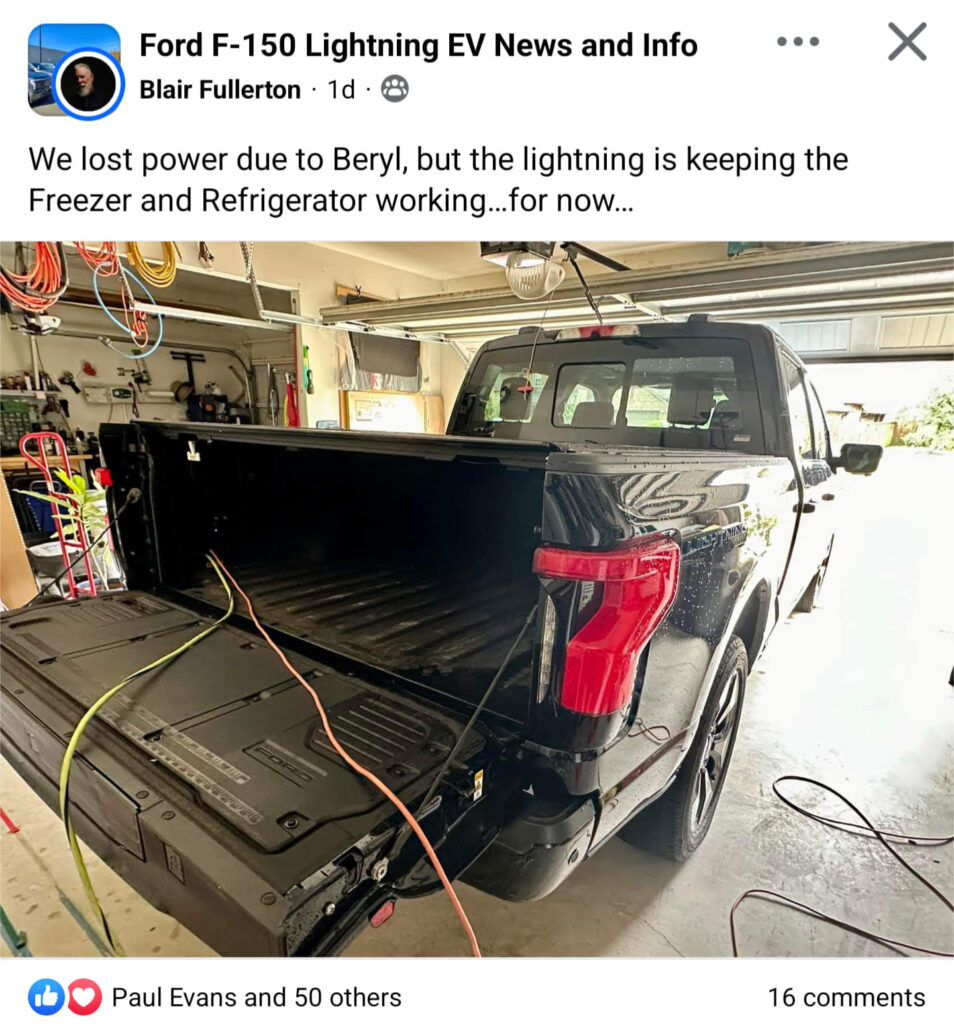
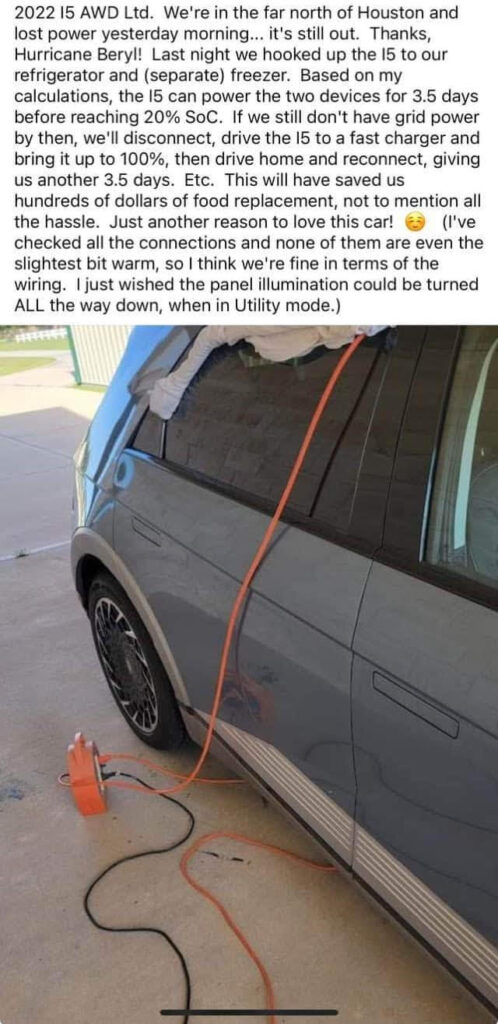
Charging before a storm is important because electric vehicles can be a tremendous tool in the event of lost power. Many newer EVs have power-out vehicles to load like the F150, Hyundai, and Kia models, while others can often attach inverters to their 12v batteries. By charging before the storm, these EVs can help power appliances like WiFi, Fridges, and AC units for critical periods after a storm or days in case of extended power outages. This time frame can even be extended with trips to a local working fast charger as these chargers run separate from the main power grid.
Get ahead of the storm and be prepared like these EV-owners that shared their 2024 experiences on Facebook where they utilized their EVs by powering their refrigerators during a hurricane. Whether the weather you’re facing includes intense rain, snow, wind, lightning, sleet, or worse phenomena, EVs provide a critical emergency energy source that can help you and your family stay safe and empowered through the worst weathers.